The toxicity and long-term health effects of recreational use of 2-FA appear to have not been scientifically studied, and the exact toxic dosage is unknown. This is due to the short history of human use of 2-FA. Anecdotal reports from people who have tried 2-FA in public suggest that with sparing use and low to moderate doses, there are no adverse health effects (although there are no guarantees). Others have noted that the d-isomer form has similar effects to d-amphetamine, and there is little evidence of significantly different toxicity. It is worth noting that in medicinal chemistry, fluorine substitution in central nervous system drugs is occasionally considered desirable and is common practice due to the associated increased lipophilicity of the substitute. It is strongly recommended that harm reduction measures be taken when using this drug. Tolerance and addictive potential Chronic use of 2-FA, like that of other stimulants, can be considered moderately addictive with a high potential for abuse and can trigger psychological dependence in some users. Once dependence or addiction develops, cravings and withdrawal symptoms may occur upon abrupt discontinuation. Long-term and repeated 2-FA use leads to tolerance to many of its effects. This means users must take increasingly higher doses to achieve the same results. Afterward, it takes 3-7 days for tolerance to be reduced by half, and 1-10 days to return to baseline (with non-use). 2-FA exhibits cross-tolerance with all dopaminergic stimulants, meaning that after 2-
Single result is displayed
-
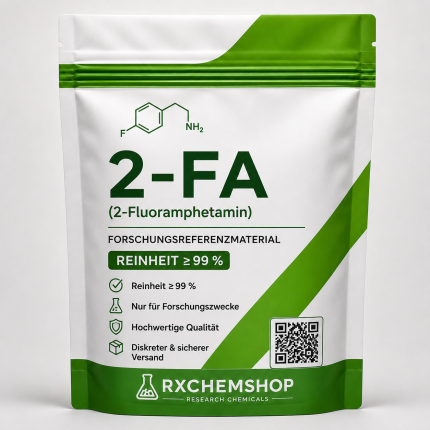
Buy 2-FA (2-fluoroamphetamine) | Purity ≥99 %
Price range: €365 to €3,800Selection of execution This product has several variants. Options can be selected on the product page